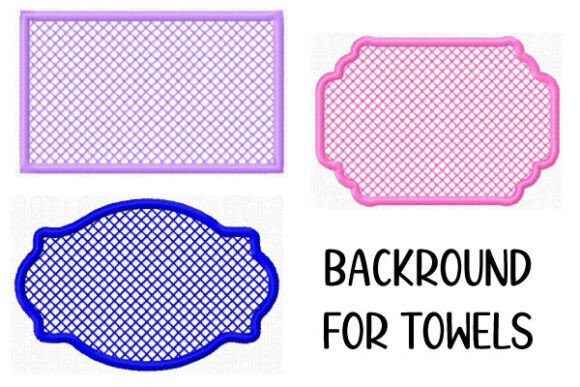
Review: Knockdown Stitch Backgrounds for Textured Fabrics
As an embroidery designer who spends half my life digitizing and the other half staring at a hoop, I have learned that the difference between a amateur-looking item and a boutique-quality piece often comes down to the foundation. We talk endlessly about thread colors and font choices, but we rarely discuss the invisible hero of textured embroidery: the knockdown stitch. Recently, I downloaded Knockdown Stitch Backgrounds – 3 Shapes from Creative Fabrica to test its viability for a upcoming line of custom kitchen linens and plush baby blankets. Here is my honest evaluation of how this digital embroidery file performs in real-world commercial applications.
First Impressions and Design Aesthetics
When I first opened the folder, I was looking for utility rather than flashiness. The set includes three distinct background shapes, which immediately struck me as versatile rather than restrictive. The visual mood is clean, functional, and understated. These are not decorative borders meant to steal the show; they are structural elements designed to support your main motif. The detail level is precise, with a stitching personality that suggests durability over delicacy. This is exactly what you want when working with challenging surfaces. The decorative appeal lies in its simplicity—it creates a smooth canvas on top of chaotic textures, allowing your monograms or central motifs to pop without getting lost in the pile of the fabric.
Performance on Textured and Challenging Fabrics
The primary selling point of this product is its specific design for towels and textured fabrics. In my shop, I frequently receive orders for personalized bath towels and waffle-weave throws. Without a proper base, satin stitches can sink into the loops, resulting in a muddy, unreadable design. I tested these shapes on a high-pile cotton towel and a thick terry cloth. The results were impressive. The knockdown stitch effectively flattened the fibers just enough to provide a stable surface for the subsequent layers.
This performance extends beyond towels. I also applied the shapes to a fleece sweatshirt and a textured canvas tote bag. On the sweatshirt, the fill stitch of the background prevented the nap from interfering with the crispness of the lettering. For the tote bag, which had a coarse weave, the background acted as a secondary stabilizer, ensuring the machine embroidery design remained sharp and professional. If you are creating handmade products like aprons or pillow covers using heavy linen or bouclé fabrics, these backgrounds are essential for maintaining visual clarity.
Versatility Across Product Lines
One of the strongest aspects of Knockdown Stitch Backgrounds – 3 Shapes is its adaptability across various commercial embroidery projects. I envision these being particularly useful for:
- Custom Apparel: Perfect for hoodies and crewnecks where the fabric texture might distort fine details.
- Baby Items: Ideal for minky blankets or plush robes where softness often compromises stitch definition.
- Kitchen Linens: Essential for tea towels and dishcloths that undergo frequent washing and abrasion.
- Home Decor: Great for textured pillow covers or nursery decor where a clean, polished look is required.
For Etsy sellers and small business owners, consistency is key to building buyer trust. Using a reliable background shape ensures that every finished product looks uniform, regardless of slight variations in fabric texture. This consistency enhances your brand presentation and makes your product photography look more professional, which directly impacts customer engagement and sales.
Practical Considerations for Machine Embroidery
While the design is robust, there are practical factors to consider before loading it onto your machine. First, always check the stitch density. Knockdown stitches add bulk, so if you are working with a delicate fabric or a small hoop size, ensure your machine can handle the additional penetration. I recommend testing on scrap fabric identical to your final material. This allows you to adjust your tension and verify that the thread color contrast works well. For dark fabrics, a lighter thread in the knockdown layer can help brighten the area for the top design, while on light fabrics, matching the thread color keeps the background invisible.
Stabilizer choice remains critical. Even with a knockdown stitch, textured fabrics require appropriate support. I used a cut-away stabilizer for the stretchy sweatshirt fabric and a tear-away for the woven towels. The combination of the right stabilizer and these background shapes resulted in zero puckering. Also, pay attention to curved surfaces. If you are embroidering on a cap, ensure the shape fits within the curvature of the front panel to avoid distortion.
Enhancing Product Value and Commercial Viability
From a business perspective, using tools like Knockdown Stitch Backgrounds – 3 Shapes elevates the perceived value of your handmade product. Customers may not know what a knockdown stitch is, but they recognize quality. They see crisp edges, readable text, and a design that sits neatly on the fabric rather than sinking into it. This attention to detail justifies higher price points for personalized gifts and custom apparel. Furthermore, for those who create printable mockups or digital embroidery files for resale, including these backgrounds in your design assets can make your listings more attractive to buyers who struggle with textured materials.
Final Verdict and Usage Tips
Is Knockdown Stitch Backgrounds – 3 Shapes worth downloading? For any serious embroidery designer or craft entrepreneur working with textured media, the answer is yes. It solves a common technical problem with an elegant, simple solution. However, before you begin production, always review the specific file details on the Creative Fabrica product page. Confirm the available formats match your machine, check the recommended hoop size, and read the license terms to ensure compliance for commercial use. While the description notes these are ideal for monograms and motifs, always inspect small details after stitching to ensure the density suits your specific thread and needle combination.
In conclusion, this set is a practical, no-nonsense addition to your library of design assets. It may not be the most flashy download you own, but it is likely to become one of the most used. By providing a clean foundation for your creativity, it allows your main designs to shine, ultimately leading to better-quality finished products and happier customers. Whether you are decorating a single baby blanket for a gift or running a batch of embroidered patches for a boutique, these backgrounds offer the reliability needed for professional results.